My blood is proof they exist

A three-panel woven jacquard and furniture series depicting political and social narratives surrounding the Chinese-American adoptee diaspora.
Wall pieces to be installed in a guesthouse for adoptees returning to China
pt. I, migration
5 x 9 ft, mohair, wool, rayon, Kyototex metallic, opalescent slit film yarn
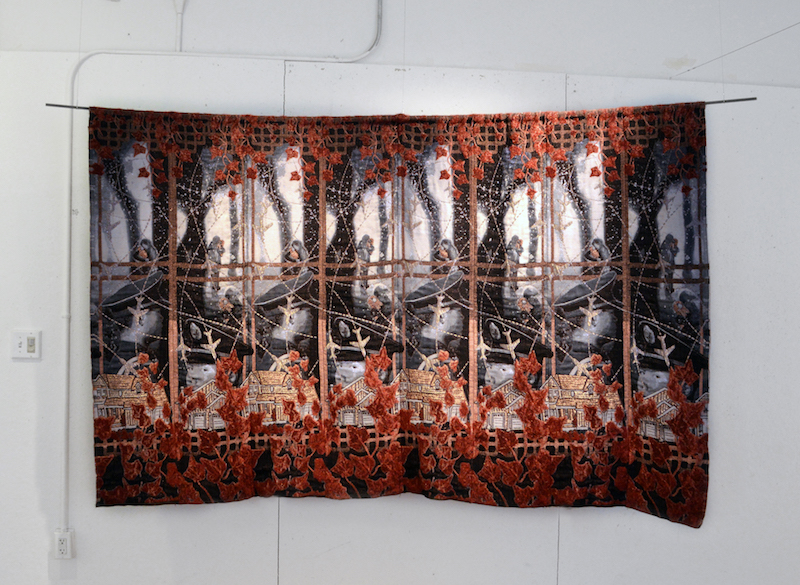
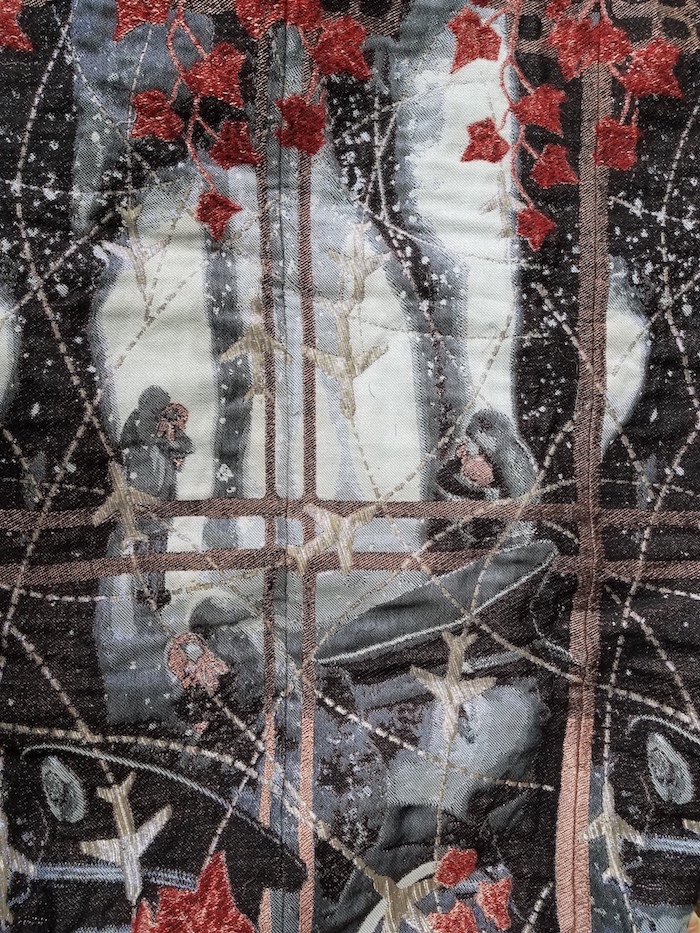
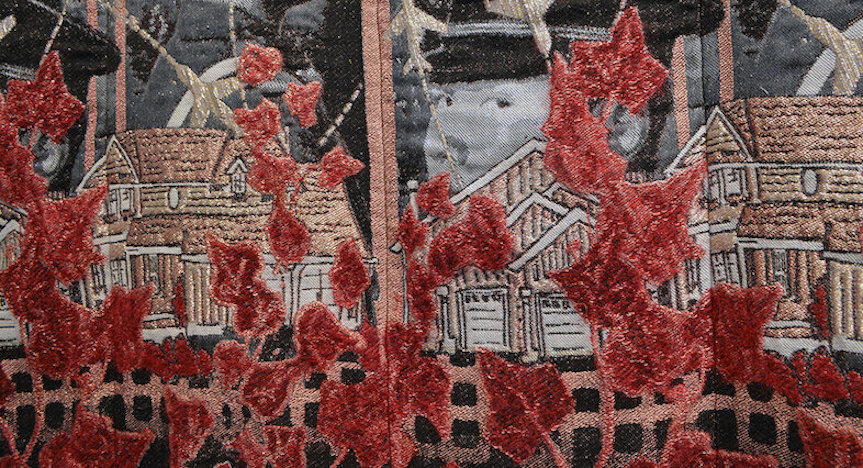
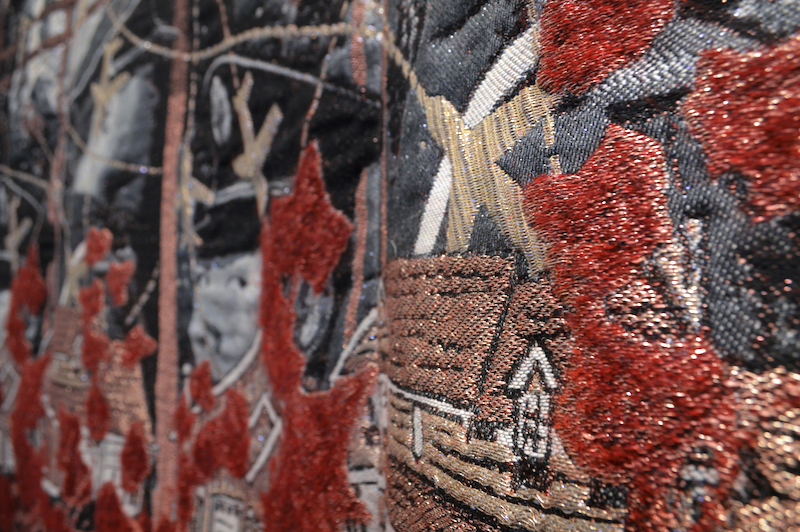
In the 1980’s, the Chinese government issued the One-Child Policy in an attempt to control population. Due to a long standing cultural preference for sons, hundreds of thousands of female infants were abandoned across China. Many ended up in orphanages and were subsequently adopted by families in North America, Europe, and Australia. Airplanes, a metaphor for the adoptee diaspora, streak across the composition. Behind the lattice windows are a cluster of shadowy figures. In their arms are infants, wrapped in rose-gold threads. In the foreground is a cascade of English ivy and the two homes I lived in as a child, located in a suburb outside of Seattle. Overhead, snow falls from the branches of willow trees in Daguan Park, the location I was documented to have been found by the local police in November, 1994.
Pt. II, acculturation
7 x 9 ft - hand-dyed wool silk blend, acrylic, rayon, opalescent slit film yarn
Until high school, it never occurred to me that I was Asian. Though my parents made valiant efforts to expose me to Chinese culture, I felt no connection or interest. I was content living in the suburbs of Seattle and the thought of another set of parents in China rarely crossed my mind because it registered as an abstract idea rather than a tangible fact. Then, in the summer before my senior year of high school a friend recommended the novel, Messages from an Unknown Chinese Mother written by a Chinese radio host from the 1980’s who privately interviewed mothers who had been forced to surrender their daughters. Their stories opened a doorway into Chinese history, laws, and long-held beliefs I had never contemplated before.
~~~~
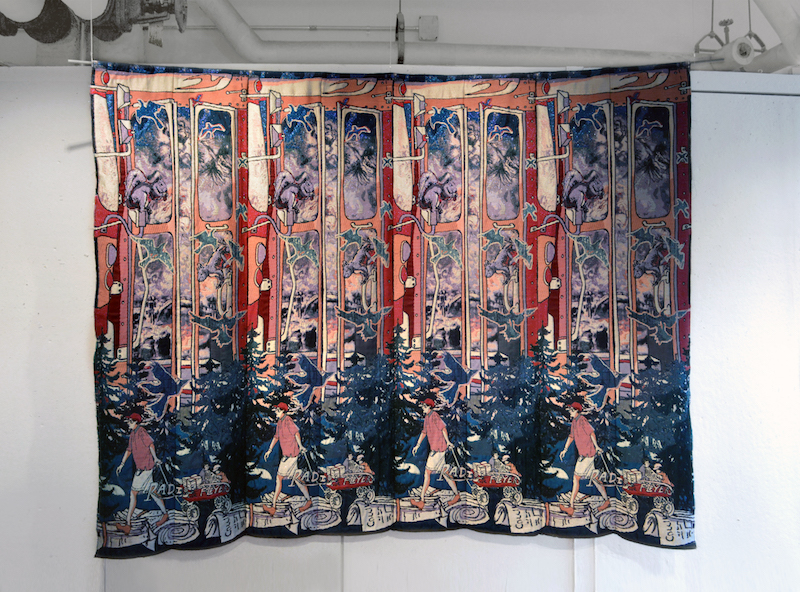
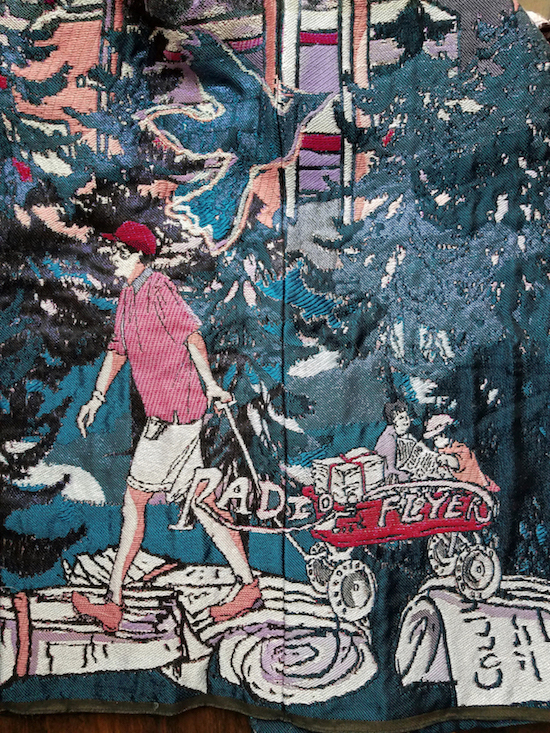
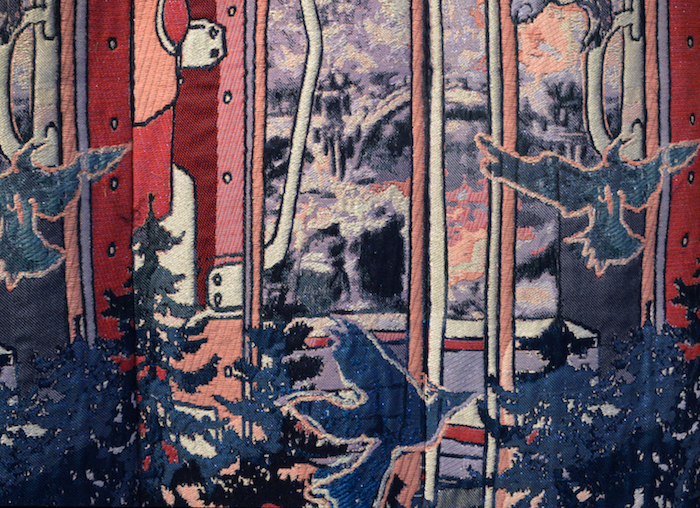
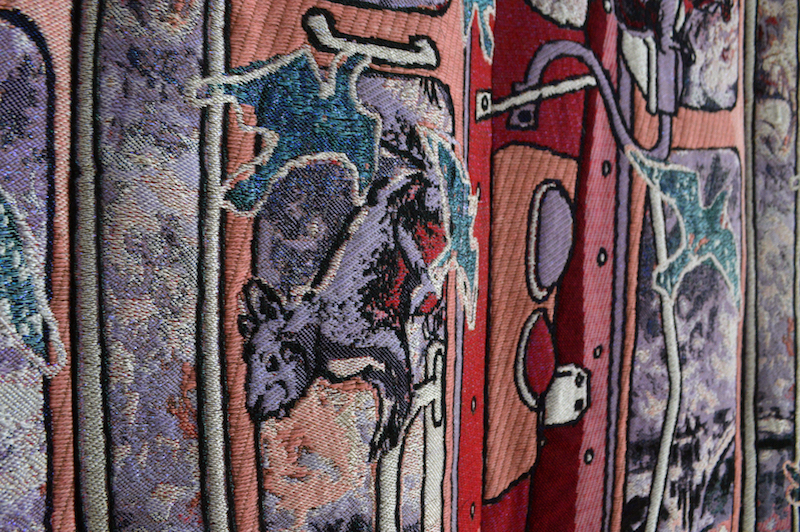
A school bus frames the second woven panel, as squirrels and bluejays dart above a row of evergreen trees. My adoptive father is depicted at the bottom, making his weekly newspaper route while pulling my sister and I in a red wagon behind him. Inside the school bus window, a man and woman sit in a park by the river, looking into a constellation-filled sky. The constellations, also known as “The Four Guardians” in Chinese astronomy, depict four cardinal directions and seasons: the Azure Dragon of the East, Vermilion Bird of the South, the White Tiger of the West, and the Black Tortoise of the North.
pt. III, the return
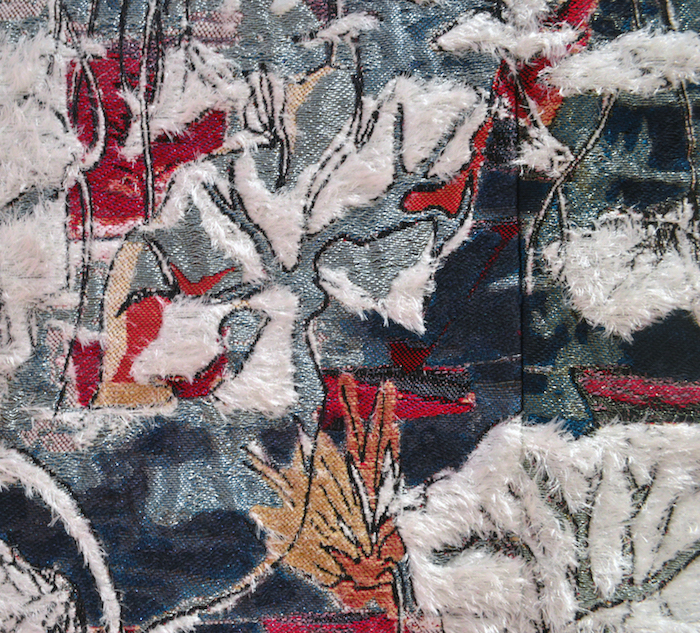
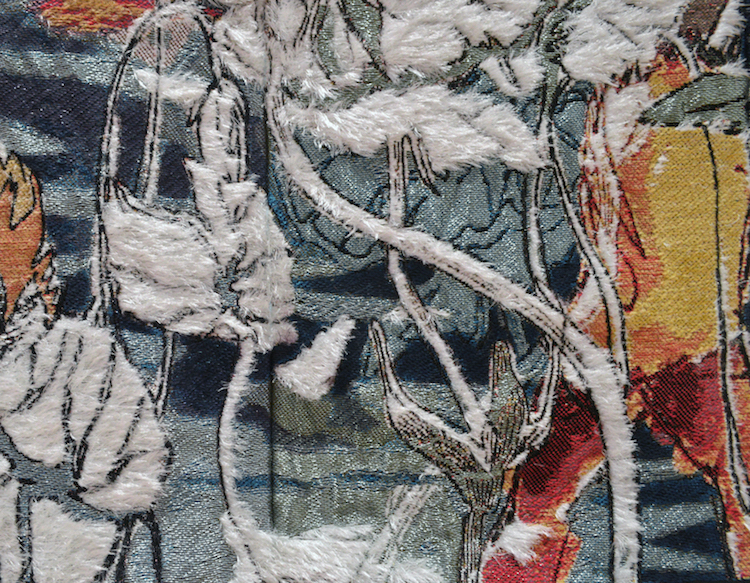
6 x 9 ft, nylon eyelash, cotton chenille, hand-dyed wool silk blend, metallic Kyototex, opalescent slit film yarn
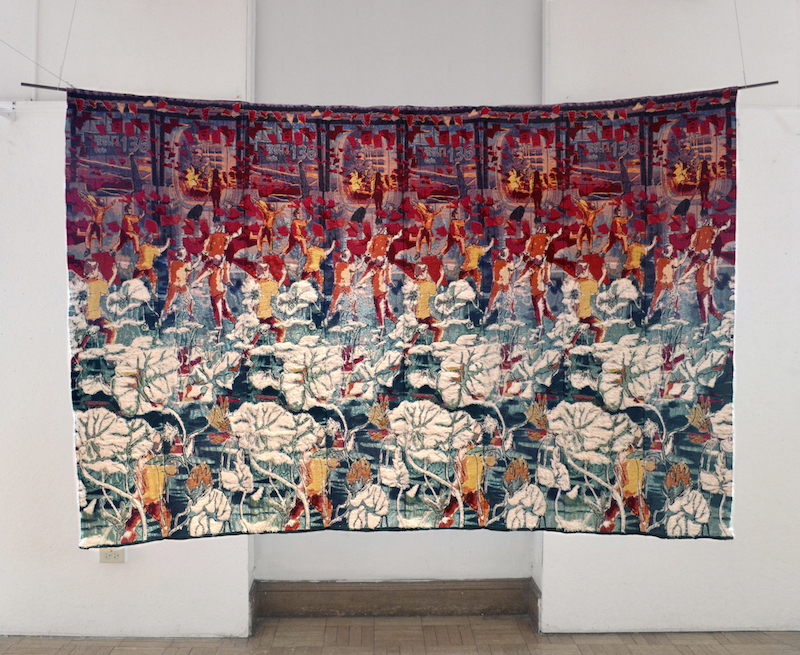
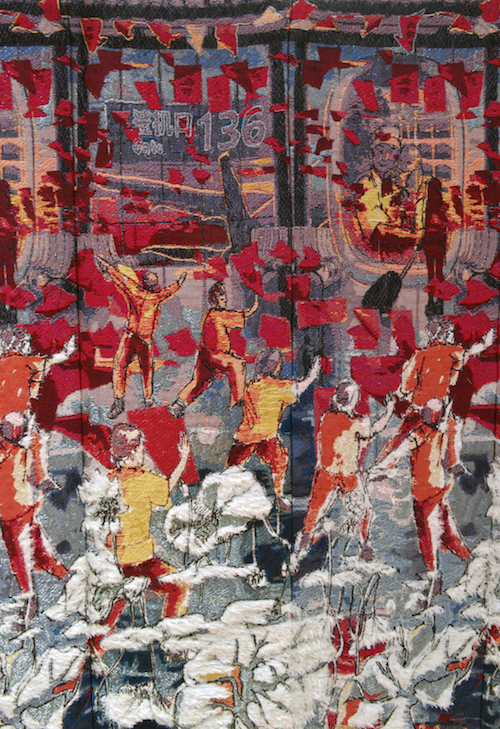

An illuminated arrow points me in the direction of Gate 136. Dodging throngs of travelers, I take a left down a narrow hallway and the commotion of overlapping voices wanes. For a brief moment, as I watch a plane roll across the rain-slicked pavement and towards the gate, my vision blurs. I recall a photograph, given to my parents in 1995, depicting a nanny from the Kunming Children’s Welfare Institute holding me close to her face when I was six months old. Shrugging off the straps of my backpack, I sit, close my eyes, and wait.
~~~
When I was eighteen, I flew back to China and visited Daguan Park, the location I was left as an infant in Kunming. During my travels in Kunming, I often saw elderly women gathered on the park’s many pavilions to exercise by way of synchronized dance. With the sound of classical flutes drifting from a portable stereo, red prayer flags, and giant lily pads snaking across the park’s endless expanse of waterways, the dancers’ presence became a source of familiarity. Though verbal communication was not possible, towards the end of the trip I found myself alongside them, imitating their routine. The final woven piece depicts these memories, and highlights the importance of public gathering spaces across cultures.