Pinewoods Folk Dance and music Camp
it’s like leaving a monastery… or a boarding school?
September 5th, 2026
I am sitting on a nubbly red sofa at the back of the staff lounge. To my right is giant floor-to-ceiling window screen, with a vista of Long Pond and clusters of slender, swaying branches. The breeze is cool, not cold enough for us to board up the screen wall, but the goosebumps on my arms are a reminder that August concluded five days ago and the long, humid evenings it accompanied are unlikely to remain.
Straight ahead, I can see a partial view of the kitchen’s twelve-foot pastry table. Kitchen staff criss-cross from prep station to prep station, carting fifty-pound bags of flour, and periodically monitor the industrial stand mixers. At 6:30am, the kitchen staff are the first to arrive in building and at 9pm they are last to leave, after the pots from each evening’s 140-camper dinner has been rinsed and set to dry.
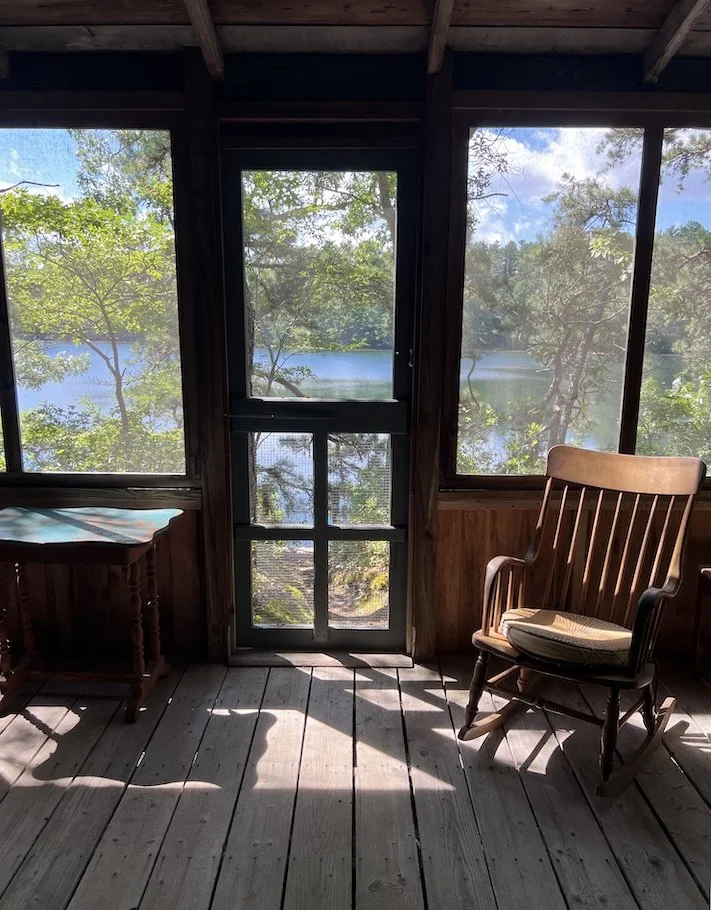
A porch view from one of the cabins. All the buildings except the staff office and two rustic camper houses are open air.
As a middle schooler in Washington State, summer sleepaway camp was a yearly anticipatory event. A week of high-intensity social bonding formed through campfires, canoes, communal meals, and late night talks with fellow cabin mates, some of whom I wrote letters to once I returned home. As a college student, I would attend an occasional weekend retreat with some of the same friends I had attended the youth summer camps with, but these utopian camp moments took a subordinate role to my budding professional life after moving to Boston to work at a product design start up.
This is why finding Pinewoods was magical.
Last spring, I was on the hunt for a local campground that could host an event my husband and I wanted to organize for a group of forty-some friends. Pinewoods Camp popped up on Google Maps in an area I was unfamiliar with called Myles Standish State Forest, just an hour south Boston. Images showed pristine beaches, clear water, and lots and lots of little cabins peeking between the towering pines. Unfortunately, the camp didn’t actually allow the public to rent their property, but they did have a volunteer form on their website. I had recently wrapped up contract footwear job and been interviewing with a couple other companies, so with an uncertain path ahead of me I submitted a volunteer application. Five months later, I drove down a one-way dirt path to 80 Cornish Field Road with a sheet set, towels, toiletries, and three weeks worth of clothing thrown in the back.
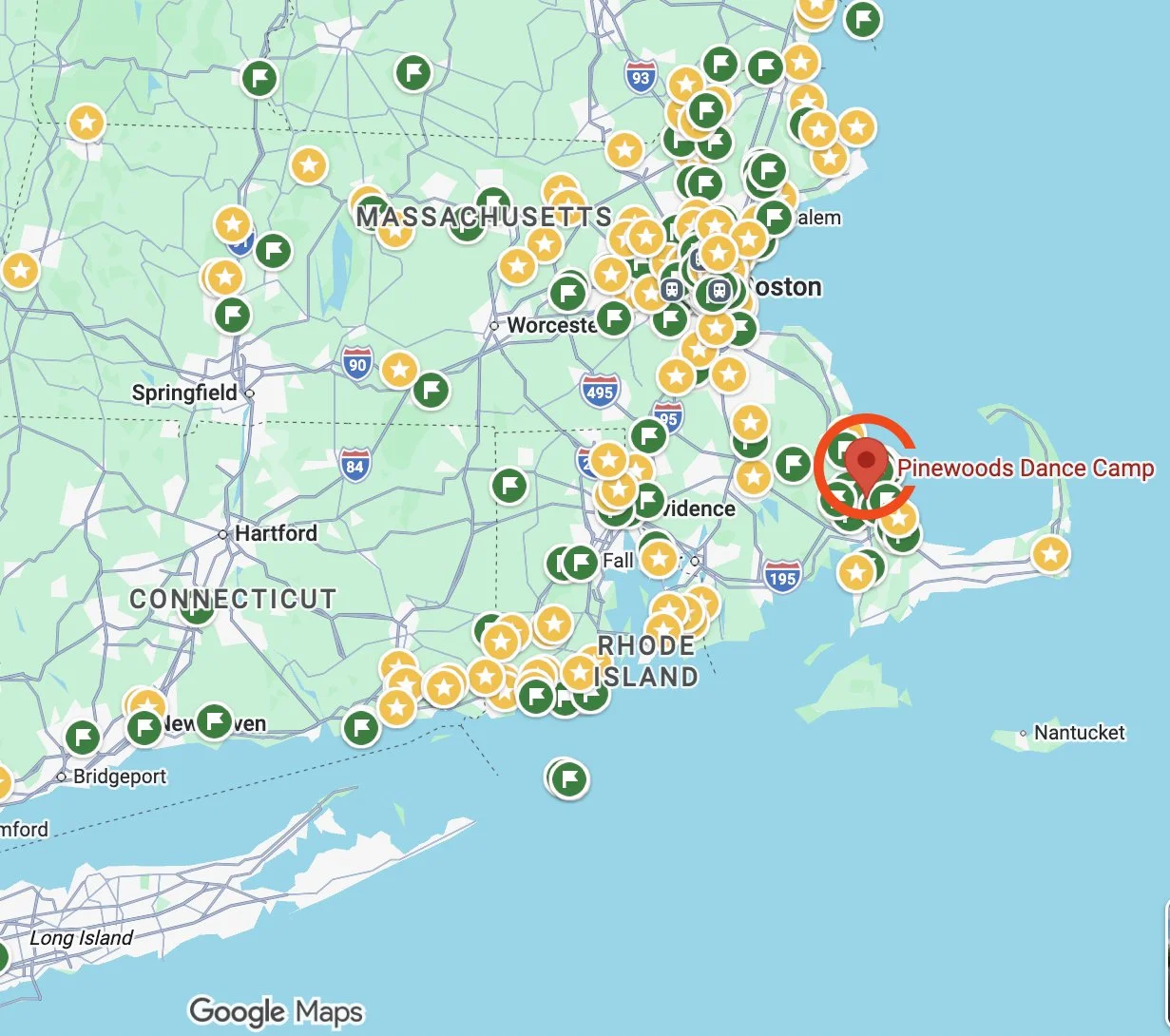
That little red pin, right before the base of Cape Cod.
One year later, I am back at Pinewoods, this time with my husband August, for a second summer of volunteering! Yes, if you are reading this post, know that my aim is to convince you to join me in for a third summer; this is 75% love letter / 25% unabashed advertisement for this special place that one colleague described as a part-monastery, part-boarding school environment.
Volunteering at camp means you work three hours each morning (basic manual labor tasks that keep camp facilities functioning) in exchange for a cabin to sleep in, three absolutely DIVINE homemade meals a day, two days off each week, and free afternoons and evenings to participate in whatever classes and social activities are happening at camp that day. (For regular campers, a week at Pinewoods can cost anywhere from $800-1200, so volunteering is a great way to participate in the offerings at no cost.) Or you can relax, crochet, read a book, swim in the pond, or drive outside of camp and explore surrounding areas in Southeast Mass.
It is truly up to each person to select their own experience at Pinewoods, which falls anywhere between solitary, tranquil, educational, and spiritual on one end, to late night D&D shenanigans, “cabin crawls”, movie nights, and skinny dipping on the other. (Cleaning toilets and sweeping dance pavilions falls somewhere in the middle).
est. 1925
Pinewoods has a 100-year history as a former Girl Scout site and dance school for local folk dance organizations in New England. Presently, the camp continues to offer weekly dance and music programs from June to September of each year.
The earliest classes taught at camp were from the English tradition – English Country Dance (ECD), the Morris (a collective term for Morris dancing, Longsword, Rapper, and clogging), and English folksongs. American dance was soon added to the programs where Contras and Squares, Kentucky Running Sets, American folk music and Appalachian stepping are all explored. The Scottish session includes the jigs, reels and strathspeys of Scottish Country Dance, plus Highland Dance, and Ladies Step Dance. A wide array of dance and music is explored at International Dance sessions including traditions from the Balkans, (Bulgaria, Romania, Hungary, etc.), Greece, Israel, and Scandinavia.
The camp also welcomes new organizations to their weekly rotation such as the La Nuestra Tango Boston and the Folk Music Society of New York (my favorite program provider! Where else would I learn about (and try my hand at playing!) the mountain dulcimer or English concertina?)
Due to the storied, multi-generational history of the camp, the average age of a camp attendee is around 60. My colleagues on staff were also a diverse mix of ages, occupations, and geographic locations. A surprising number were actually from the Somerville/Cambridge area where August and I lived, but we also worked with folks from California, Philly, Tennessee, North Carolina, Maine, and Vermont amongst others.
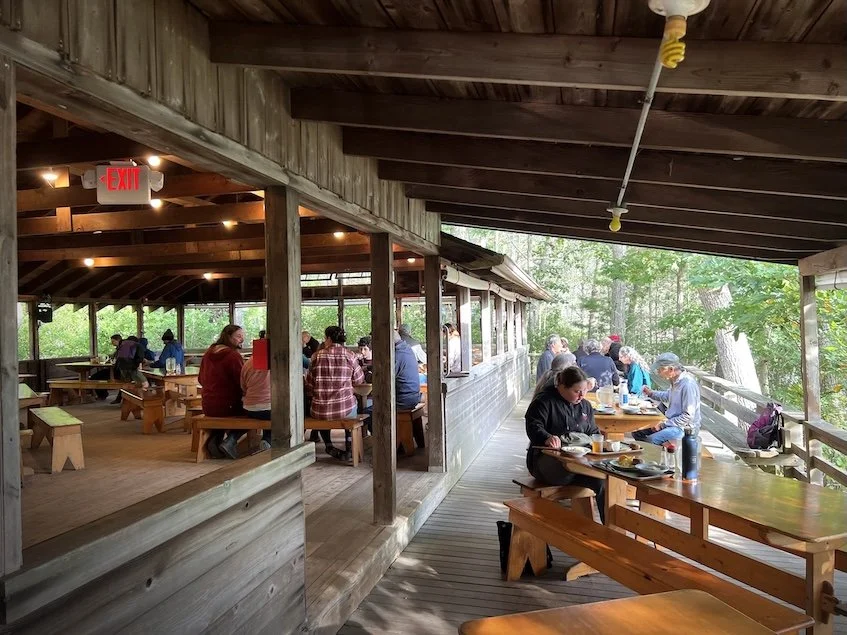
Eating area attached to the dining hall